Quick answer: A roofing estimate wins the job when it prices by the square (100 sq ft of roof, plus a waste factor), separates materials from labor instead of one lump number, states tear-off vs. overlay and layer count up front, and carries a real expiration date. Homeowners compare estimates side by side — the specific one beats the vague one almost every time, even when it isn’t the cheapest.
What Goes Into a Roofing Estimate That Actually Wins the Job?
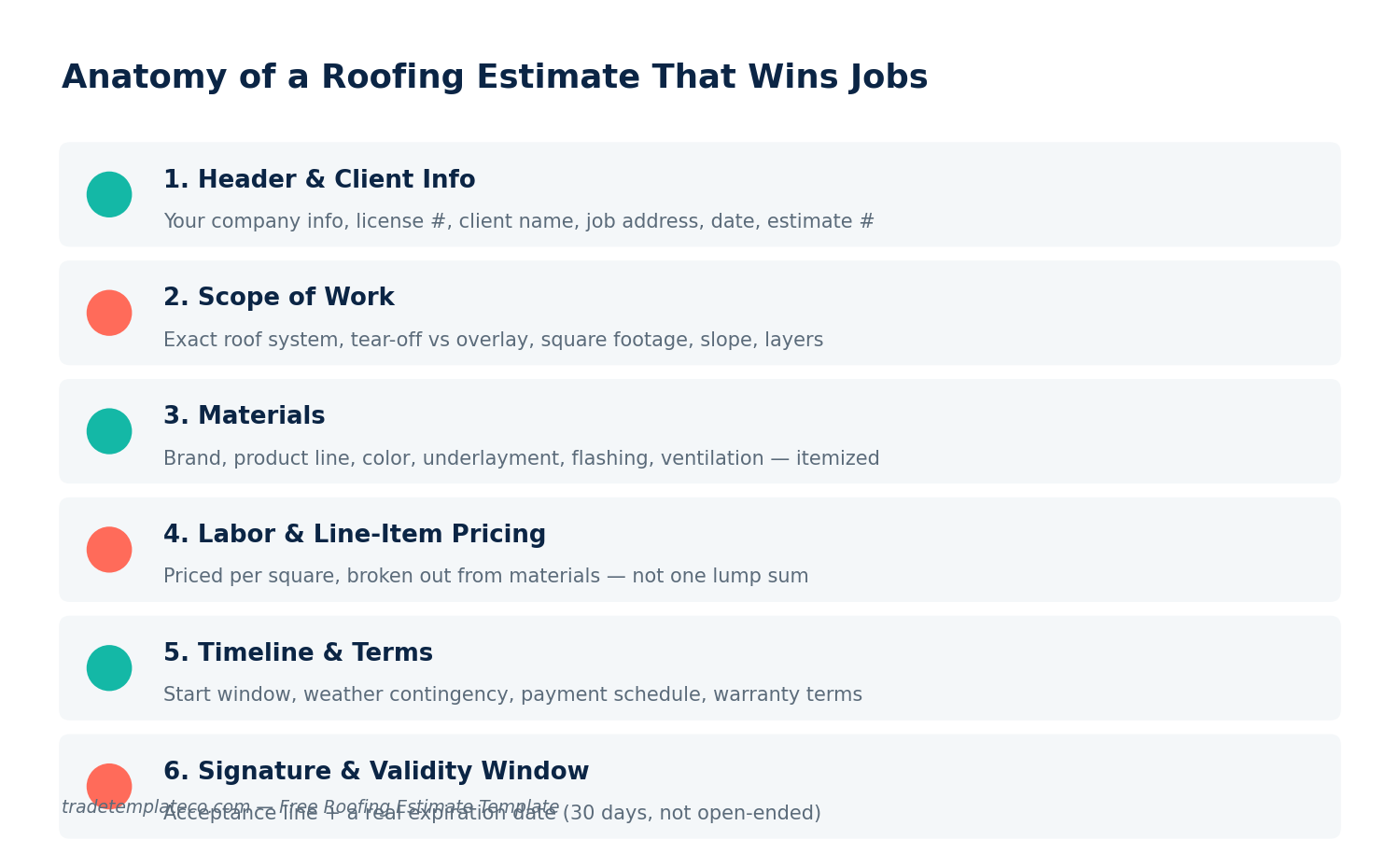
Most lost bids aren’t lost on price — they’re lost on clarity. A homeowner getting three estimates for the same roof will trust the one that reads like it came from someone who’s done this a thousand times. That means six things on every estimate, in this order:
- Header and client info — your company name, license number, insurance info, the client’s name and job address, an estimate number, and the date.
- Scope of work — the exact system: full tear-off or overlay, number of existing layers, roof pitch, and total squares.
- Materials, itemized — shingle brand and product line, underlayment type, ice-and-water shield, drip edge, flashing, and ventilation, each on its own line.
- Labor, priced separately from materials — never folded into one number.
- Timeline and terms — start window, weather contingency, and payment schedule.
- Signature line and an expiration date — 30 days is standard. Material prices move; an open-ended estimate is a promise you can’t keep.
How Do You Price a Roofing Estimate by the Square?
Roofing is priced by the square — 100 square feet of roof surface, not 100 square feet of the house’s floor plan. To get there:
- Measure the footprint of the roof (or pull it from a satellite measurement report).
- Apply a pitch multiplier — a steeper roof has more actual surface area than the same footprint on a flat roof. A 6/12 pitch adds roughly 12% over the flat footprint; a 9/12 adds closer to 25%.
- Add a waste factor — 10% for a simple gable roof, 15% or more for roofs with lots of hips, valleys, and cut-up sections where more shingles get trimmed and discarded.
- Divide the adjusted total by 100 to get your square count, then price materials and labor per square.
Write the math into the estimate itself — footprint, pitch multiplier, waste factor, final squares. A homeowner who can see how you got to the number trusts the number.
How Should You Break Out Materials vs. Labor?
A single “roof replacement: $X” line is the single most common reason a homeowner takes an estimate to a competitor for a second opinion — it looks like there’s nothing to negotiate and nothing to verify. Break it into line items instead:
- Shingles (brand, line, color, cost per square)
- Underlayment (synthetic or felt, cost per square)
- Ice-and-water shield (linear feet at valleys, eaves, penetrations)
- Drip edge and flashing (linear feet, material)
- Ridge vent or other ventilation
- Fasteners and accessories
- Dumpster/disposal and permit fee
- Labor, priced per square, tear-off and install as separate lines if you’re doing a full tear-off
This also protects you. If the homeowner wants to upgrade shingle lines or add a ridge vent later, you’re adjusting one line item instead of re-deriving the whole number.
Tear-Off, Layers, and Code Upgrades: What to Spell Out
Most estimate disputes trace back to one of three things that weren’t written down clearly enough:
- Layer count. A tear-off with two existing layers takes longer and fills more dumpster space than a single layer or an overlay. State the layer count you’re pricing against — and what happens if you open the roof and find more.
- Deck replacement contingency. You can’t always know how much decking is rotten until tear-off. State a per-sheet price for replacement decking so it isn’t a surprise change order mid-job.
- Code-required upgrades. Ice-and-water shield in valleys, updated drip edge, and ventilation upgrades are often required by current code even on a like-for-like replacement. If the existing roof doesn’t meet current code, say so in the estimate — it explains a price difference from a competitor who didn’t catch it.
How Fast Should You Send It — and What Should the Cover Note Say?
Speed is underrated. The first clean, specific, line-itemed estimate in a homeowner’s inbox sets the bar every other bid gets measured against. Same-day or next-day turnaround, even if it means a slightly more conservative number while you confirm materials pricing, beats a “perfect” estimate that arrives four days later.
Keep the cover note short: thank them for the walkthrough, restate the scope in one sentence, point them to the line items, and state the expiration date plainly. Don’t bury the expiration date in fine print — put it near the total.
What Mistakes Make Homeowners Say No?
- One lump number with no breakdown. Looks like there’s no way to verify or negotiate.
- No product or brand named. Sets up a bait-and-switch feeling later if the actual shingles installed differ from what was implied.
- No timeline. Homeowners want a start window, not just a price.
- No signature or acceptance line. Makes the document feel informal and easy to ignore.
- No measurements or photos attached. A quick roof photo with the measurement overlay builds more trust than an extra paragraph of copy.
Estimate, Quote, or Invoice — Which Do You Send First?
An estimate goes out before the job to win it. A quote is the firm, binding number the homeowner signs to lock the job in. An invoice goes out after the work is done to collect payment. Sending the wrong one at the wrong stage is one of the fastest ways to lose a homeowner’s trust — we cover the differences and exactly when to use each in a full breakdown: Estimate vs. Quote vs. Invoice.
Frequently Asked Questions
How many roofing estimates should I expect to lose?
Even strong contractors lose a meaningful share of bids to price, timing, or a homeowner who wasn’t seriously shopping. The estimates that convert best are specific, fast, and itemized — the format matters as much as the number.
Should I estimate for free or charge for it?
Most residential roofing estimates are free; it’s the cost of winning the job. Charging usually only makes sense for complex commercial work requiring engineering review or a structural inspection.
Do I need a license number on the estimate?
In most states, yes — along with your insurance information. It belongs in the header, not buried in the fine print, since it’s often the first thing a homeowner checks before trusting the rest of the number.
What if the homeowner wants a lower number than I can do?
Adjust a specific line item — shingle line, layer count, or scope — rather than cutting the total and hoping the math still works. A line-item estimate makes that negotiation transparent instead of adversarial.
Start From a Template Instead of a Blank Page
Every section above is already built into our free roofing estimate template (Excel, Google Sheets, and PDF) — line items, waste-factor math, and a built-in expiration date field. If you write estimates for other trades too, the full set is in the Pricing & Estimates hub.
Leave a Reply