Quick answer: An estimate is a rough, non-binding number sent before the job to win the work. A quote is the firm, binding price the client signs to lock the job in. An invoice is sent after the work is finished and states exactly what’s owed and when it’s due. Send an estimate when you’re bidding, a quote when the client says yes, and an invoice when the work is done — mixing them up is one of the most common reasons contractors get paid late.
What’s Actually Different Between an Estimate, a Quote, and an Invoice?
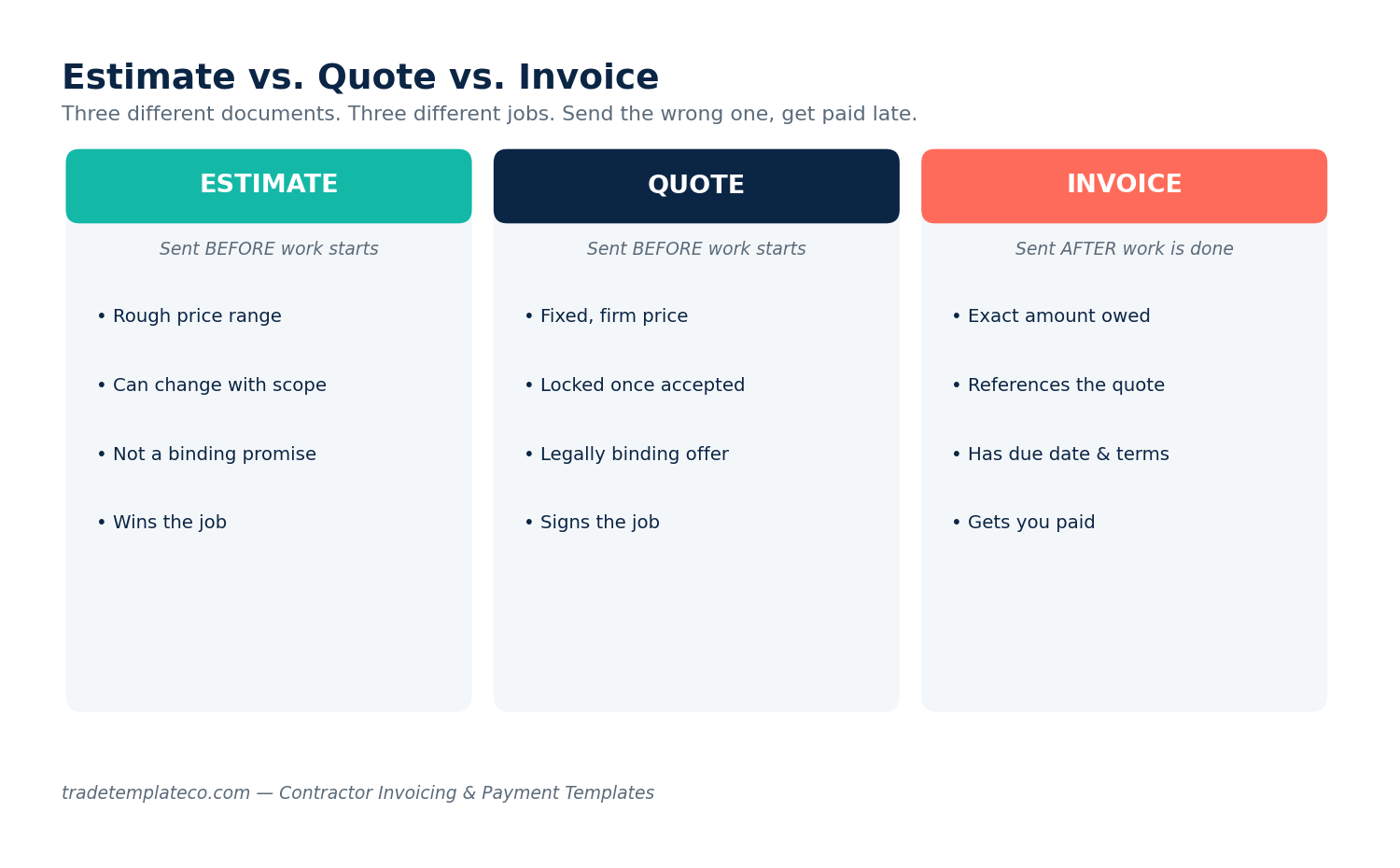
All three are documents with numbers on them, which is why contractors blur the lines — but each one does a different job in the sales and payment process:
- Estimate: A ballpark, sent before work starts. It can change if the scope changes. It’s a sales tool, not a contract.
- Quote: A firm, fixed price, also sent before work starts, but it’s binding once the client accepts it. It’s what you sign to lock the job in.
- Invoice: Sent after the work is complete (or at agreed milestones). It states the exact amount owed, references the original quote, and carries payment terms and a due date.
Think of it as a timeline: estimate → quote → work happens → invoice → paid.
When Should You Send an Estimate Instead of a Quote?
Send an estimate when you don’t yet have full information to commit to a firm number — before you’ve opened a wall, before you know what’s under a roof’s first layer, or when you’re competing for a job and need to give a homeowner a number to compare against other bids. An estimate protects you: it lets you say “this is my best number based on what I can see right now” without being locked into it if the scope changes once work starts.
The mistake to avoid: sending an estimate that reads like a firm price. If a homeowner treats your ballpark as a locked-in number and you have to raise it later, that conversation damages trust even when you’re right to raise it.
When Does a Quote Replace the Estimate?
Once you’ve seen the full scope — walked the site, opened what needs opening, confirmed materials and measurements — you move from estimate to quote. A quote should include:
- A firm total price broken into materials and labor
- Exactly what’s included and, just as important, what’s excluded
- A specific validity window (30 days is standard)
- Payment schedule and deposit terms
- A signature line for acceptance
Once the client signs the quote, it becomes the reference document for everything downstream — including the invoice.
What Has to Be on the Invoice That Wasn’t on the Quote?
An invoice isn’t just a quote with a new title. It needs its own set of details to actually get you paid on time:
- Invoice number and date — for your own bookkeeping and the client’s records
- Reference to the original quote or PO number — so the client can verify the amount matches what they agreed to
- Itemized work completed — not just a total, especially on a job with milestones or partial billing
- Payment terms — Net 15, Net 30, due on receipt — stated plainly, not assumed
- Accepted payment methods and any late-payment terms
- A clear due date, not just terms — “Due: March 14” gets paid faster than “Net 30” alone
Why Does Sending the Wrong One Slow Down Payment?
Clients pay faster when the paper trail is clean. If your “invoice” is really just your original estimate with a new date stamped on it, a client who’s slow to pay has an easy excuse: the number doesn’t match what they remember agreeing to, or there’s no reference back to a signed quote to compare it against. A proper invoice that reflects the actual work done, references the signed quote, and states a real due date removes that excuse entirely — and speeds up the follow-up conversation if payment is late, because you’re pointing to a specific due date instead of a vague expectation.
Do You Need All Three for Every Job?
Not always. Small, simple jobs — a same-day repair, a quick service call — can sometimes go straight from a verbal or single-page quote to an invoice, skipping a separate estimate step. Larger jobs, especially ones where you’re competing against other bids, benefit from all three: the estimate wins the comparison, the quote locks in the agreed scope, and the invoice closes the loop. The size and complexity of the job should decide how many separate documents you actually need — not habit.
Frequently Asked Questions
Is a quote legally binding?
Generally yes, once the client accepts it — that’s the core difference from an estimate. Treat a signed quote the way you’d treat a signed contract, because in practice, that’s what it functions as.
Can I change the price after sending a quote?
Only if the scope changes and you document it as a formal change order, ideally with the client’s sign-off before the additional work starts. Changing a quoted price without a change order is where most billing disputes come from.
How soon after finishing a job should I send the invoice?
Immediately, or within 24–48 hours. Every day between finishing the work and sending the invoice is a day added to how long it takes to get paid.
What if a client asks for “an estimate” but really wants a firm price?
Clarify it out loud before you write anything: “Do you want a ballpark to compare against other bids, or a firm number you can approve today?” It takes one sentence and prevents the whole document from being misread later.
Templates for Every Stage, By Trade
We build free, trade-specific templates for each stage of this timeline — estimate, quote/proposal, and invoice — so you’re not reformatting a generic template every time. Start in the Invoicing & Payment hub for invoice templates by trade, or browse the matching roofing estimate template if you’re bidding a roof job right now. Premium, print-ready template packs for a wider range of trades are also available on our Etsy shop.
Leave a Reply