Solve it now
Send it once, get paid on time.
Invoices and trackers built around how trades actually get paid — due dates, deposits, late fees, retainage.
Subcontractor Payment Tracker
Retainage, invoice log, lien-waiver tracking, and an outstanding-balance dashboard.
Contractor Invoice Template
Progress invoices with a schedule of work, deposit and retainage lines, plus a T&M invoice, deposit receipt and payment-reminder letters.
Lien Waiver Template Pack
Protect your right to get paid — all four lien waivers plus a notice of intent to lien and a retainage request.
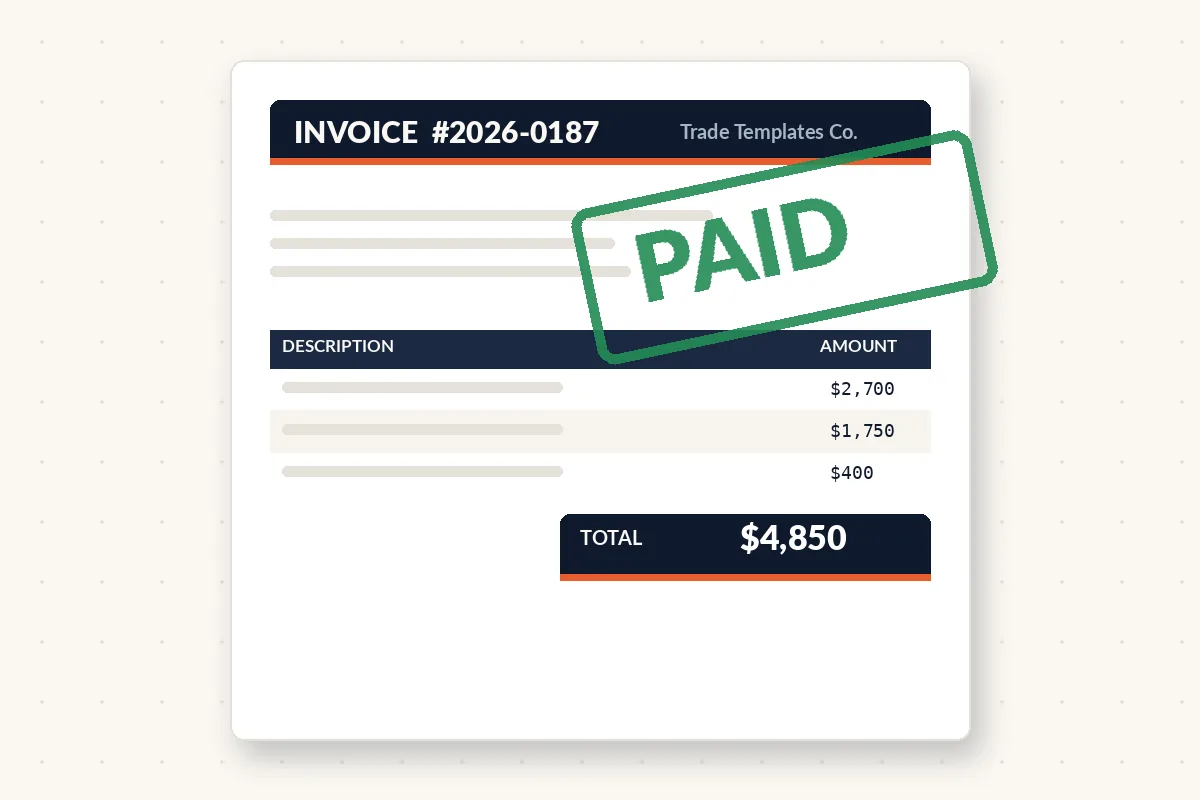
Two invoices for the same $6,200 job can get paid five weeks apart. The fast one has a due date (not just “Net 30”), a deposit already collected, an itemized scope the client recognizes, a clear late-fee line, and a payment link. The slow one is a total at the bottom of an email.
Invoice templates by trade
Free invoice templates for every trade.
Each one has a real itemized job example, deposit and late-fee terms, and a downloadable layout.
Guides publishing daily
Every topic, wired to the template that solves it.
In-depth guides roll out one per day. Until each lands, every topic links straight to the template that solves it — no dead ends.
Get each invoicing guide as it publishes.
One email when a new guide drops — plus the template that goes with it. No spam, unsubscribe anytime.
Quick answers
Invoicing FAQ.
What payment terms get me paid fastest?
A specific due date beats a vague “Net 30.” For residential, Due on Receipt or Net 7 with a collected deposit works well; for commercial, Net 15–30 paired with progress billing. Always state the late fee on the invoice itself.
Can I legally charge a late fee?
Generally yes if it’s disclosed in the contract and invoice and within your state’s usury limits. A common, defensible figure is 1–1.5% per month. The upcoming late-fee guide covers wording and stricter-cap states.
How big a deposit should I collect?
Enough to cover materials and protect against a walk-away — often 30–50% for material-heavy trades, balance on milestones or completion.