Free Contractor Proposal & Bid Template (Word, Excel & PDF)
A proposal that wins the job has eight parts: a branded cover page, a clear project overview, a detailed line-item scope of work, itemized pricing (ideally in good/better/best tiers), a payment schedule with a deposit, written terms (warranty, timeline, change-order clause), an expiration date on the price, and a signature block that converts it into an accepted agreement the moment the client signs. A bare one-line quote skips all of that — which is exactly why proposals close more jobs at higher prices. Below is a free layout for Word, Excel, or PDF, plus a real flooring-remodel proposal broken down section by section.
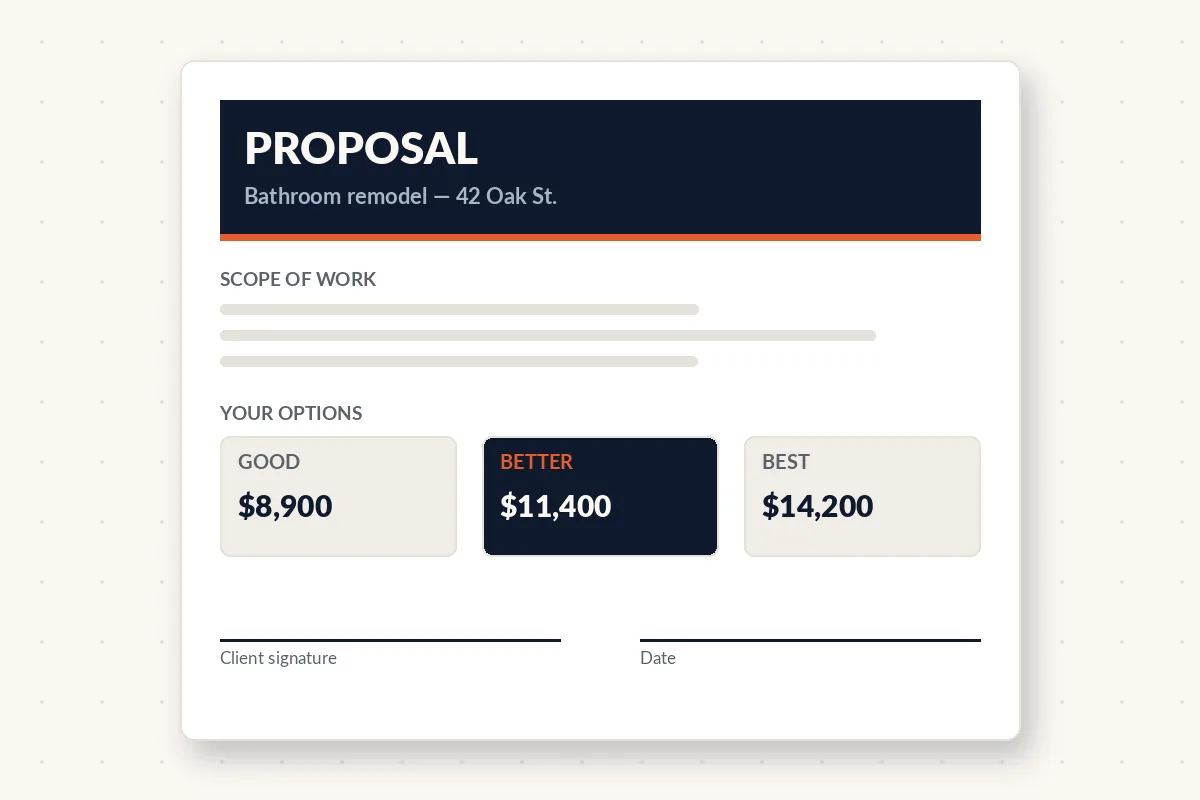
A quote is a number. A proposal is a sales document that happens to contain a number. The difference shows up in close rate: when a homeowner is comparing three contractors, the one who hands over a branded proposal with a real scope, tiered options, and a clear next step reads as the safer hire — even at a higher price — because everything else about the job already looks handled. Here is what belongs in yours.
What every winning proposal needs
Skip one of these and you either lose the bid to a cleaner-looking competitor or open yourself up to a scope fight three weeks into the job:
- A cover page with your logo, business name, license number, and the client’s name and job address — the first thing they see should look like it came from a real company, not a text message.
- A project overview — two or three sentences restating what the client asked for, so they know you listened before they read a single price.
- An itemized scope of work, broken into phases or rooms with materials named by product and quantity, not just “flooring — whole house.”
- Itemized pricing, ideally offered as good, better, best tiers rather than one take-it-or-leave-it number.
- A payment schedule — deposit at signing, a draw at a defined milestone, balance on completion.
- Written terms: workmanship warranty length, estimated start and completion window, and a change-order clause stating that anything outside this scope is billed separately in writing.
- An expiration date on the price — 15 to 30 days is standard, protecting you from a material-cost jump between bidding and booking.
- An acceptance and signature block — a signed proposal is a signed contract; without it, you have a conversation, not an agreement.
A real proposal, section by section (a 1,450 sq ft flooring remodel)
Here is how a main-level luxury vinyl plank replacement with new baseboard reads when it is broken down the way a proposal should be, instead of collapsed into one number:
| Line item | Detail | Amount |
|---|---|---|
| Demo & haul-away | remove existing flooring, transitions, disposal | $1,150 |
| Subfloor prep | self-leveling compound, moisture barrier where needed | $980 |
| Material — LVP flooring | 1,450 sq ft @ $4.35/sq ft, 10% waste factor | $6,940 |
| Material — baseboard & transitions | new 3.25″ baseboard, quarter-round, thresholds | $1,280 |
| Installation labor | 3 installers, 4 days @ crew rate | $4,200 |
| Furniture move & final clean | move-and-return service, jobsite clean | $300 |
| Subtotal | $14,850 |
Every line answers a question the client would otherwise ask over text at 9 p.m. The scope of work behind this pricing table should read the same way — room by room, product by product. If you are still writing scope from scratch on a legal pad, our free Scope of Work & Estimate Description Generator turns a rough job description into proposal-ready language in under a minute, and our construction estimate template is where these numbers should originate before they ever land on a proposal.
Good, better, best — presenting three prices instead of one
A single price invites a single response: yes or no. Three tiered options invite a choice, and a choice keeps the client inside your proposal instead of shopping it against a competitor’s one-line quote.
- Good ($12,400): builder-grade LVP, standard baseboard, 3-day install — the budget-conscious option that still protects your margin.
- Better ($14,850): the mid-tier LVP above with upgraded baseboard and furniture-move service — usually the one clients pick, and the one your proposal should visually anchor as the recommended choice.
- Best ($18,200): premium waterproof core LVP, matching stair nosing, and an extended 5-year workmanship warranty.
Contractors who switch from a single quote to a three-tier proposal consistently see their average ticket rise, because “better” only looks expensive next to “good” — it looks reasonable next to “best.”
Contractor Contracts & Bids Kit
Scope of work, change order, subcontractor + independent contractor agreements, and lien waivers — one kit.
Why a proposal beats a bare quote
A quote is disposable — a number a client can screenshot and forward to your competitor for a price match. A proposal is harder to shop apples-to-apples because the scope, the materials, and the terms are specific to you. It also does legal work a quote does not: a signed acceptance block means the client agreed to your payment schedule, your warranty length, and your change-order clause, not just your price. And because the price carries an expiration date, you are protected the moment lumber, LVP, or copper prices move before the client books the job.
How to present the price
Never open a proposal on the price page. Walk the scope first — in person if you can, on a screen-share if not — so the client sees the demo, the prep, and the materials before they see a dollar figure. When you do get to price, present the better tier first and frame good and best around it, rather than listing cheapest to most expensive. And always leave a printed or emailed copy behind rather than reading the number aloud and moving on — a proposal that is not physically in the client’s hand within the hour is a proposal that is easy to forget by the next contractor’s pitch.
Frequently asked questions
What is the difference between a proposal and an estimate?
An estimate is a rough, often non-binding number given early in a conversation. A proposal is a formal, detailed document with scope, pricing, terms, and a signature block — once signed, it functions as your contract for the job.
Should I offer more than one price on a proposal?
Yes, when the job allows it. A good/better/best structure keeps the client inside your proposal making a choice, instead of shopping a single number against other contractors.
How long should a proposal price stay valid?
15 to 30 days is standard for most trades. Put an explicit expiration date on the document so a delayed decision does not lock you into old material pricing.
Does a signed proposal count as a contract?
In most cases, yes, once it includes scope, price, terms, and a signature or accepted-by line — which is why the terms section (warranty, payment schedule, change orders) needs to be on the proposal itself, not left to a verbal understanding.
What deposit should I ask for on a proposal like this?
30 to 50 percent at signing is common on material-heavy jobs like flooring, with the balance due on completion. State the exact percentage and dollar amount on the proposal, not just a policy.
Get the Tuesday Template
One field-tested back-office template and a get-paid-faster tip in your inbox each week. No fluff.